·Runs on your machine
·Your own Claude Code, Codex or opencode
·No subscription, no token margin
·$49 lifetime
Design for builders who ship with agents
Your agent writes the code.
Nobody wrote you a design system.
You design blind. The agent helps, and it still hands you no tokens, no components and no palette.
So the app ships. It works, and no one can read it. Already shipped? Every new feature lands on a different structure, because the base was never set.
Prism gives your screens a system, designs on it, and keeps an agent correcting the ones you have.
The Studio download and the web scorer open here soon. This page collects nothing, and asks for no email.
- $49
- once, for life. No monthly rent.
- 100%
- local. Your repo never leaves the machine.
- 6
- Rubric criteria, published in full.
- 0
- tokens billed on top of your own agent.
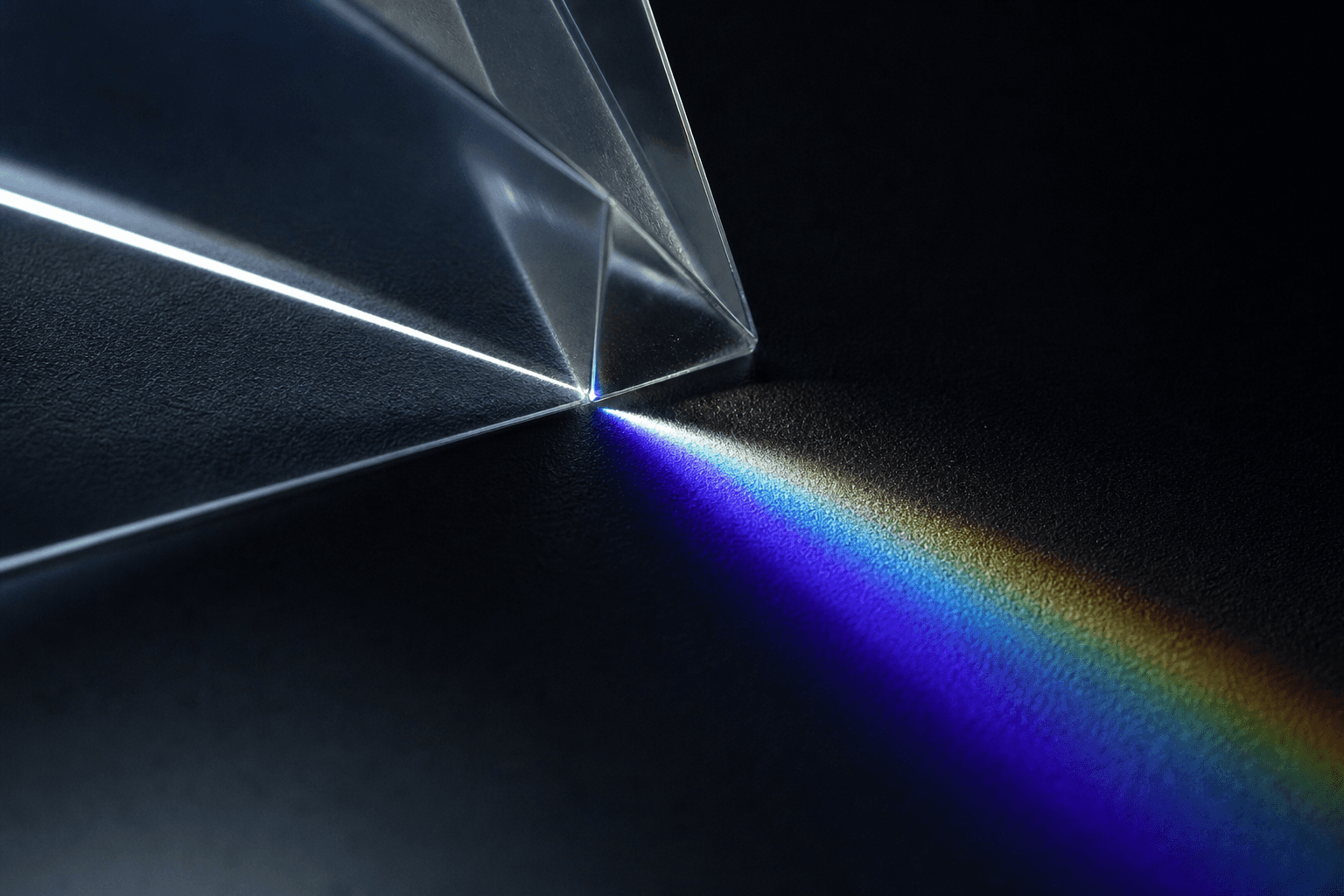
White light in, every wavelength out.
The information was always there. A prism is what makes it legible.
How Prism helps
Five steps, in the order you will actually meet them.
01
Read your idea, then show you real design
Describe the app, or point Prism at the one you shipped. You get concrete directions to react to, not a questionnaire.
- input
- App Store link
- or
- a screenshot from your build
- out
- 3 Directions to choose from
02
Put a design system in place
Colour, type, spacing and radii become named tokens in your repo. One source of truth your agent can be held to.
- color.primary
- #7C5CFF
- type.body
- 16/1.5
- space.2
- 8pt
- radius.md
- 12pt
03
Design new screens on that system
New screens inherit the tokens instead of inventing their own. The tenth feature looks like the first one.
- frames
- iOS and Android
- output
- code on your tokens
- never
- a second palette
04
Add motion only where it earns its place
Transitions land on state changes and navigation. Nothing animates on first paint, and nothing loops.
- duration
- 120-220ms
- curve
- ease-out
- never
- on first paint
05
Keep an agent correcting the design as you build
Every screen gets a Teardown against the published Rubric. Each Finding carries the measured number and a prompt.
- cites
- 4.5:1 · 44pt · 8pt grid
- ends in
- a Prompt Pack
- runs
- on your machine
Step 05, in full
What the correcting agent actually says.
One screen from a running app, anonymised. Nothing below is an opinion. Every line cites what it measured.
9:41
Welcome back
You logged 4 runs this week. Keep the streak alive.
18.4
KM
4:52
PACE
612
KCAL
This week
Tuesday morning loop
5.2 km · 26 min
›
Sunday morning loop
12.1 km · 61 min
›
Friday morning loop
4.0 km · 21 min
›
Thursday morning loop
6.8 km · 34 min
›
Monday morning loop
3.2 km · 17 min
›
Sunday morning loop
8.4 km · 42 min
›
Saturday morning loop
5.5 km · 29 min
›
Wednesday morning loop
7.3 km · 38 min
›
Tuesday morning loop
4.6 km · 24 min
›
Home
Runs
Plan
Feed
Me
Home · screen 1 of 9 · read from the App Store listing
Score
47/100
Findings
6 total · 1 critical
38s · Build 2026.09.02
- Critical3.1:1
Body copy fails AA against your own background
Secondary text is #5B5C63 on #101117. AA needs 4.5:1. Outdoors, that line is gone.
Colour
- Major32pt
Tab bar targets sit below the platform minimum
Five items share a 34pt bar. iOS asks for 44pt. Thumbs miss, and misses read as bugs.
Rhythm
- MajorMaterial
A Material action button on an iOS screen
The floating plus is Android's pattern. On iOS it says the app was ported, not designed.
Platform truth
- Major1 step
One type size is carrying the whole screen
Titles, labels and metadata all sit near 10pt. With no scale, nothing can lead.
Typography
- 2 findings not shownHierarchy · States
Prompt Pack · finding 1
In lib/theme.dart, replace every literal text
colour with two tokens: text.primary #ECEDF2
(14.8:1) and text.secondary #8A8F9C (5.6:1) on
surface.base #15161C. Delete #5B5C63 from the
file. Then raise each tab bar item hit box to
44pt, keeping the icon at 24pt. Do not change
layout or copy.
Written for the agent already in your terminal. Tokens and point values, not adjectives.
The Rubric, published
Every threshold is written down before your screen is scored.
A score you can check is a score you can argue with. These six criteria are the whole of it.
No
Criterion
Threshold
What it measures
01
Typography
≥ 3 steps · 1.3-1.6 line-height
A real type scale, and body copy set for reading rather than for fitting.
02
Colour
≤ 2 accents · every pair ≥ 4.5:1
Accent count, the contrast ratio on every text pair, semantic colour used semantically.
03
Rhythm
4/8pt grid · targets ≥ 44pt
Spacing on a grid, one radius family, touch targets a thumb can hit.
04
Hierarchy
1 primary action per screen
One thing leads. When three elements shout at equal weight, nothing is chosen.
05
Platform truth
safe areas · native components
iOS patterns in an iOS app. Safe areas and the Dynamic Island respected, not guessed.
06
States
empty · loading · error
Three screens nobody designs and every user meets. Scored like the happy path.
Why it stays on your machine
Local, connected to your own agent, bought once.
Local-first
The Studio runs on your Mac and edits your repo in place. Each Direction is isolated in a Git Worktree, so main stays clean.
Checkpoint before every agent run. Reversible by design.
Your own agent
Prism drives Claude Code, Codex or opencode with the subscription you already pay for. No tokens are billed on top.
No cloud model of ours between you and your repo.
Bought once
$49lifetime
Early Bird is $24 and the 5-seat Studio Pack is $149. The alternative elsewhere is $20-50 every month, forever.
This site takes no payment. The Studio ships from its founder.
Answers
The questions a sceptical builder asks first.
- Does my code leave my machine?
- No. The Studio runs locally and edits your repo in place. Iterations are isolated in Git worktrees, so main stays clean.
- Which agents does it work with?
- The one you already run: Claude Code, Codex, opencode. Prism drives it with your own subscription and adds no margin on your tokens.
- Is there a subscription?
- No. A licence is $49 once, for life. Early Bird is $24 and the 5-seat Studio Pack is $149.
- I already shipped an app. Is it too late?
- No, and it is the common case. Prism extracts a design system from the screens that exist, then holds every new screen to it.
- Do I need to know design?
- No. Every Finding names the rule, the measured number and the fix. The Rubric is published, so you can check the score yourself.
- What can I do on this page today?
- Read the Rubric and a full Teardown. The web scorer and the Studio download open here soon, and this page collects nothing.
Find out what your worst screen scores.
The scorer opens here first, then the Studio download. Keep the link, or send it to whoever else ships screens from a terminal.
No waitlist, no email field, nothing collected on this page.
- Teardown
- the scored critique of one screen
- Finding
- one scored issue, with its number
- Prompt Pack
- the paste-ready agent instructions
- Canvas
- every screen, live, on your machine